
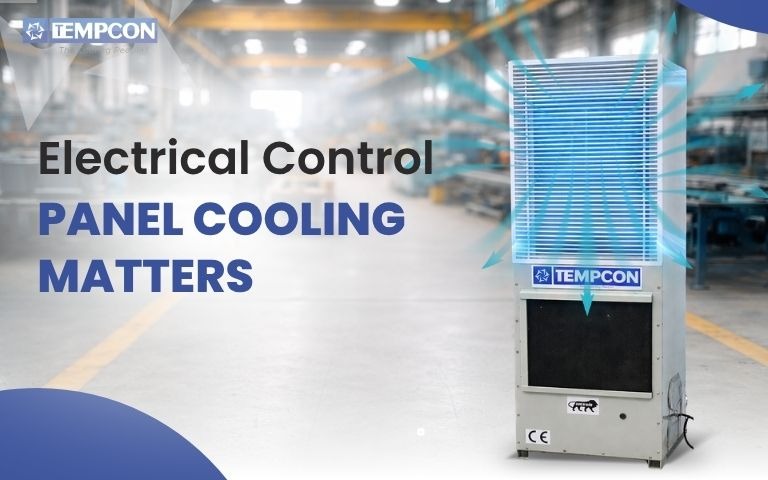
Modern electrical enclosures generate immense heat that only industrial ACs can remove. Passive ventilation won’t work when the internal heat gain is high.
This age-old method comprises louvres, vents, and exhaust fans. Such conventional features cannot sufficiently cool modern electrical units. Let’s find out why passive ventilation is not the right choice.
Why Passive Ventilation Falls Short in Industrial Environments
Electrical units, these days, generate immense heat in modern industrial sectors. Here, passive ventilation will not work for the following reasons.
The Growing Cooling Demands of Modern Electrical Systems
Modern electrical systems generate excessive heat while handling serious industrial loads.
Heat Generated by High-Density Electrical Components
High-density electrical panels comprise PLCs, VFDs, and power electronics.
Continuous Operation and Load Variability
Industrial operations rarely stop. Equipment runs around the clock under fluctuating loads. Heat builds up inside an enclosed electrical panel room.
Impact on Equipment Lifespan and Downtime
Electrical components age faster due to excessive internal heat. Insulations get damaged more. Eventually, the units break down frequently.
This is where a cabinet AC or an electrical enclosure AC performs very well. Let’s find out.
What is a Cabinet AC / Electrical Enclosure AC?
A cabinet or electrical enclosure AC is a specialised cooling unit. It can regulate internal temperature and humidity inside an enclosure with its smart controls. Here’s how these units are ideal for electrical enclosures.
Closed-Loop Cooling Explained
Cabinet ACs operate on a closed-loop cooling principle. They cool down the internal air and circulate it thoroughly. The entire enclosure unit is isolated from the surrounding environment. This type of cooling prevents contamination and moisture development.
Designed Specifically for Electrical Enclosures
These industrial ACs have a compact design that can fit in any enclosure. These units do not take up much space but offer precise cooling.
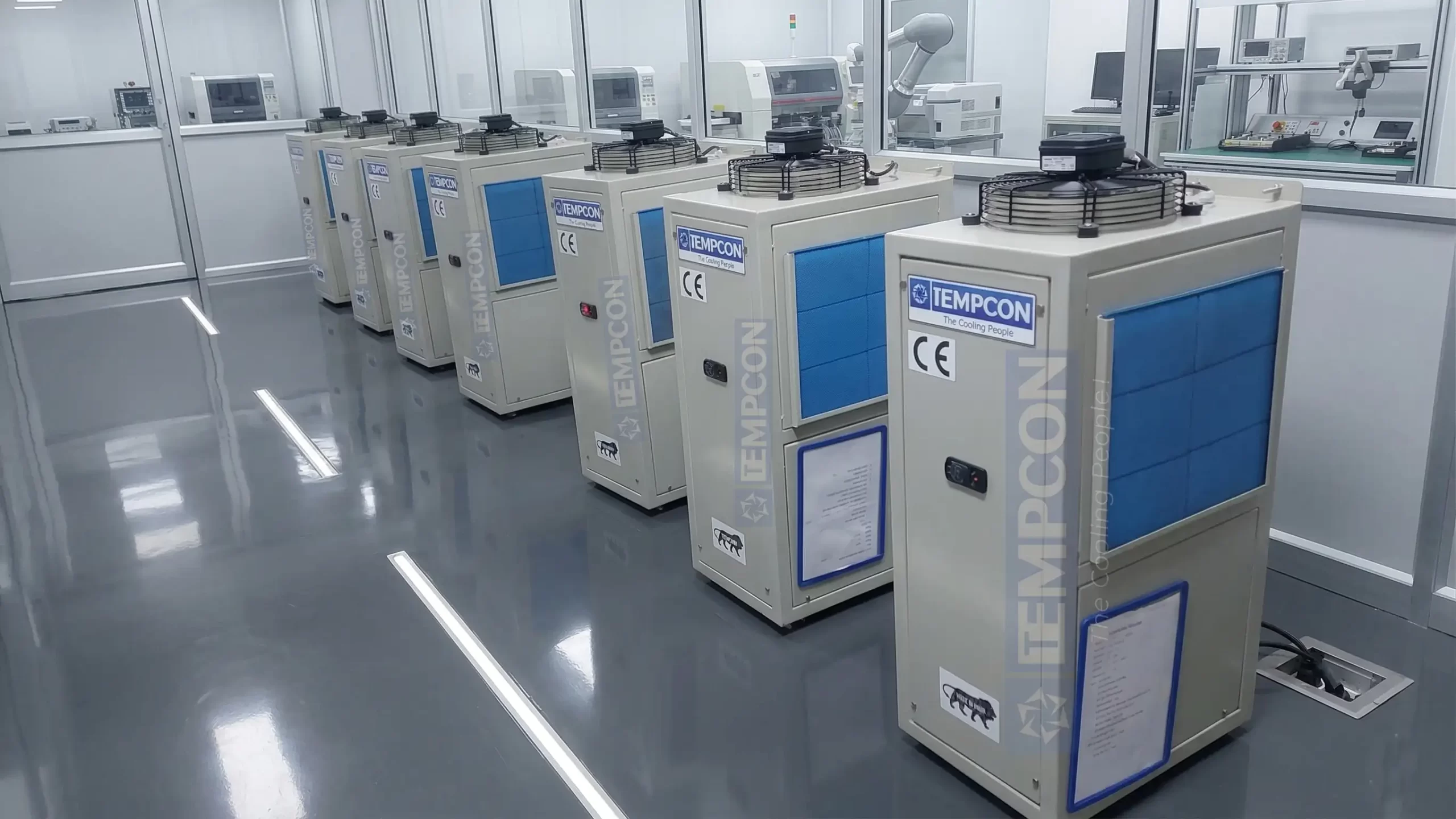
Proven Expertise
High-Efficiency Compressor Systems
Modern reciprocating compressors circulate refrigerants efficiently. This results in consistent cooling performance even in demanding conditions.
Eco-Friendly Refrigerants
Tempcon uses zero-ODP R134a and R407C refrigerants.
Intelligent Microprocessor Controls
Modern microprocessors regulate fan speed and compressor operations automatically.
Industry-Grade Air Filtration
Tempcon uses reusable air filters to stop dust and industrial contaminants. These filters can be cleaned and reused.
Strong Structural Design
An industry-grade stainless steel body with powder coating makes the industrial ACs more durable. These materials are safe for hygiene-sensitive industrial processes.
Types of Electrical Enclosure AC Systems
Wall-Mounted Cooling Units
- Easy installation on existing enclosures
- Cost-effective upgradation of existing systems
- Suitable for a wide range of applications
Modular Cooling Systems
- Integrated into enclosure doors or structures
- Ideal for scalable and modern setups
- Designs are highly flexible in terms of capacity
Key Advantages of Cabinet AC Over Passive Cooling
Apart from the spatial and design features, here are the key advantages of industrial enclosure cooling that beat passive ventilation.
Precise Temperature Control
- Microprocessor-based regulation to stabilise indoor conditions
- Maintains tight temperature bands (~22°C)
- Strict temperature variation control
Protection Against Harsh Environments
- IP54/IP55/IP56 protection ratings
- Highly resistant to dust, moisture, and corrosive atmospheres
Enhanced Equipment Lifespan
- Reduced thermal stress
- Consistent operating conditions around the clock
Energy-Efficient Operation
- Intelligent cooling adapts to the current load instantly
- Optimised compressor performance based on the requirement
- Smart control saves energy by up to 30%
Cabinet ACs can maintain the required temperature even if the ambient temperature is around 50°C. Hence, these units are suitable for electrical enclosures even in heavy engineering units. But, how will you choose the right setup?
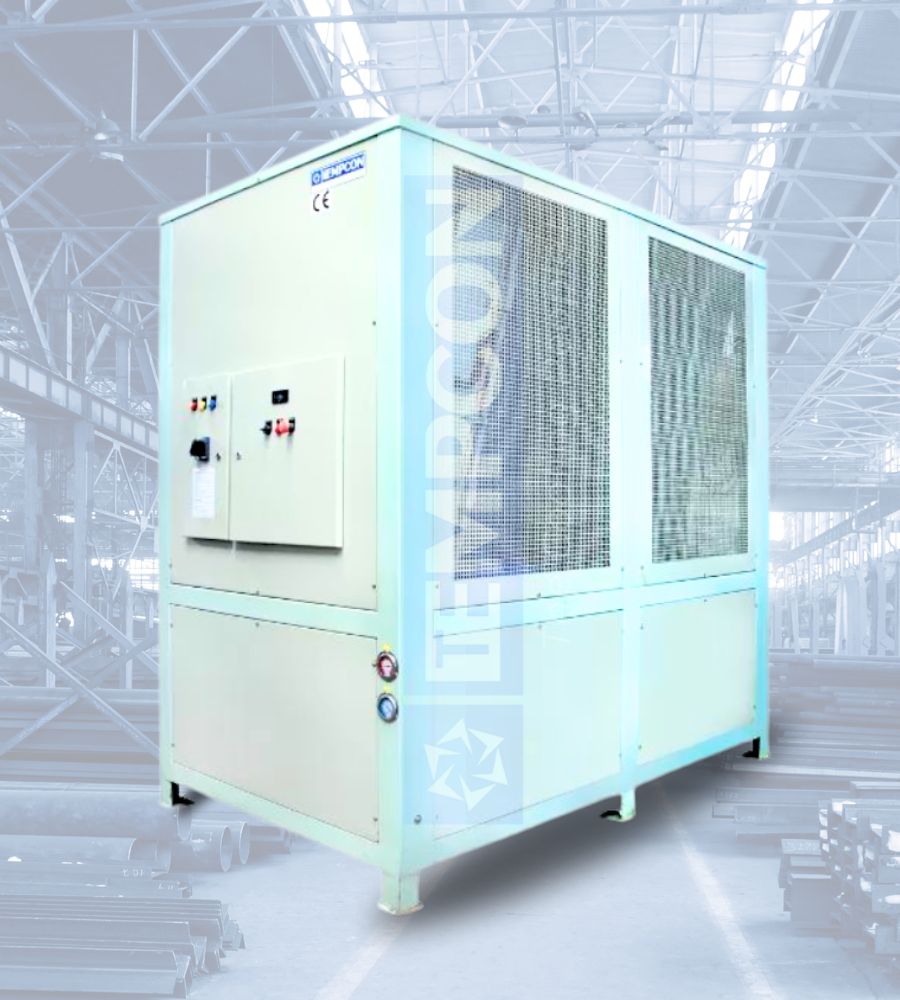
How to Choose the Right Cabinet AC for Your Application
It all depends on how well you know the cooling requirements. You can calculate the internal heat gain first. Then, you can look for the right industrial AC units. Here’s what you need to check.
Cooling Capacity Requirements
The AC units vary in terms of cooling capacity. This capacity can range from 0.3 kW to 5.8 kW.
Environmental Considerations
Evaluate the indoor and outdoor factors for dust, humidity, and contaminants. These conditions determine the protection level an industrial AC needs.
Installation Space and Scalability
Check your electrical enclosure’s installation requirements. You can then select a wall-mount or modular AC. Keep space for future expansion if needed.
Make sure your choice is future-proof in terms of regulatory compliance and industry standards.
Future-Proofing Electrical Systems with Active Cooling
Here is what you must check to make your industrial AC future-proof.
- IP, UL, NEMA certifications (compliant with the latest industry standards)
- Eco-friendly refrigerants
- Energy-saving modular components and smart control
- Reduced environmental footprint
- Systems designed for long operational life
Move Beyond Passive Cooling for Reliable Operations
Smart industrial cooling beats passive ventilation always. A small investment can save your resources for years. Cabinet and electrical enclosure ACs are smart choices for your unit’s efficient performance.
Still confused regarding choosing the right AC for your electrical enclosure? Let us know your requirements. We provide industrial cooling consultation, installation, and post-sales support.