Industrial ACs offer a level of performance, reliability, and environmental tolerance that comfort ACs cannot match. To understand their importance, it’s essential to look at how E-rooms function and what makes their cooling requirements distinctly different.
E-Rooms = Nerve Centre
E-rooms form the nerve centre of modern industrial facilities. They hold MCC panels, PLC systems, UPS units, battery banks, or inverter drives.
Combating Generated Heat
These spaces house equipment that runs nonstop and generates concentrated heat. Even a slight increase in temperature can lead to malfunction, shutdown, or costly downtime.
Industrial Cooling Control
This is why E-rooms need an industrial cooling solution more than a conventional split AC. They require a purpose-built industrial air conditioner for E-rooms designed for precision and endurance.
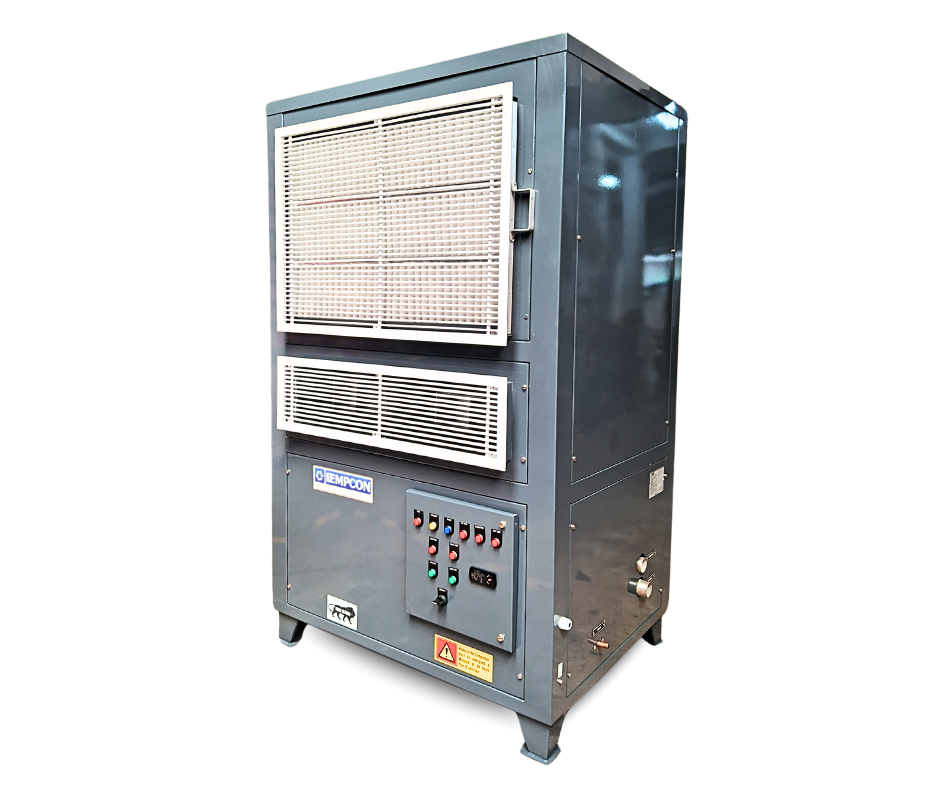
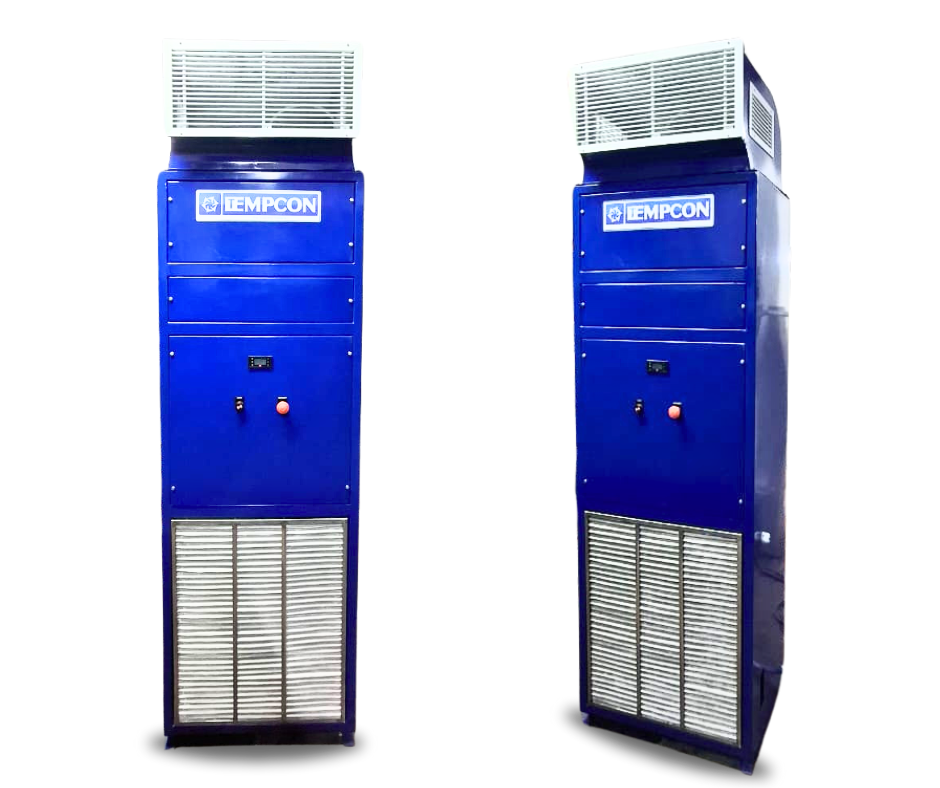

Understanding E-Rooms and Their Unique Cooling Demands
E-rooms are compact spaces filled with heat-sensitive components such as automation panels, drives, control systems, and power electronics. These devices operate continuously, and the heat load remains high throughout the day.
What makes the situation more complex is the environment. An E-rooms often:
- Almost no natural ventilation
- Exposed to dust, oil vapours, and humidity
- Faces fluctuating ambient temperatures, sometimes above 45–50°C
A normal split AC is not designed for these conditions. It is built for comfort cooling, lighter-duty cycles, and clean indoor air. In an industrial setting, it clogs quickly, loses efficiency, and fails to maintain the tight temperature tolerance required for sensitive electrical equipment. This directly increases the risk of equipment trips, overheating, and system downtime.
To avoid these risks, facilities need cooling systems designed specifically for industrial demands.
How Industrial ACs for E-Rooms Make a Difference?
Industrial air conditioners differ from commercial split units in one foundational way. They are built for performance under stress. Every industrial AC component, from their compressor to their filtration system, is designed for high loads and harsh ambient conditions. Here’s how they make a significant difference.
Built for 24/7 Continuous Operation
E-room cooling cannot stop. Electrical systems operate around the clock, so the cooling system must match that duty cycle. Normal ACs are built for 8–10 hours of daily use and cannot withstand continuous operation without rapid wear.
Industrial ACs, on the other hand, are engineered for continuous duty. Their compressors, fans, coils, and electrical components are designed to run 24×7 without losing performance. This ensures the equipment inside the E-room stays within safe operating temperatures at all times.
Designed for Harsh Industrial Conditions
Industrial environments often experience extreme ambient temperatures, far above what normal ACs can handle. Comfort ACs commonly shut down or derate when outdoor temperatures cross 45°C.
Industrial ACs from manufacturers like Tempcon use:
- High-ambient compressors
- Heavy-duty coils
- Industrial-grade airflow systems
These enable the system to keep cooling effectively even when the surrounding temperature is extremely high.
Superior Protection Against Dust and Contaminants
Dust, fine particles, oils, and fumes are common in industrial settings. These contaminants can choke the filters of a standard AC within weeks, causing performance drops or failures.
Industrial ACs counter this using:
- IP-rated enclosures
- Corrosion-resistant materials
- Sealed internal components
- High-capacity filtration systems
This prevents clogging, protects internal parts, and ensures reliable performance even in challenging environments.
Precision Temperature & Humidity Control
E-room devices are highly sensitive to temperature variations. Even a small deviation can cause voltage instability or equipment malfunction. Industrial ACs maintain tight temperature control (often within ±1°C), eliminating hotspots and ensuring a consistent environment.
Controlling humidity is equally important. High humidity increases the risk of corrosion, insulation failure, and short circuits. Industrial ACs regulate both temperature and humidity, creating ideal conditions for continuous electronic operation.
Built for Compact Spaces and Easy Serviceability
E-rooms typically have limited floor space due to dense layouts of panels and wiring. Industrial ACs come in compact wall-mounted or floor-standing designs, allowing flexible installation without disrupting the layout.
Their features are:
- Front-service access
- Removable filters
- Optional temperature alarms
Such features make maintenance predictable and reduce downtime.
Energy Efficiency and Long-Term Value
Although industrial ACs cost more initially, they offer lower lifecycle costs. Their energy-efficient components and durable construction reduce breakdowns, electricity consumption, and replacement expenses. Avoiding equipment shutdowns also saves significant operational costs.
Smart Monitoring and System Integration
Modern industrial operations rely on automation, and cooling must integrate seamlessly with these systems. Tempcon’s industrial ACs support:
- PLC and DCS integration
- Remote monitoring
- Fault alarms and diagnostics
This helps operators identify issues early and maintain continuous system health.
Tempcon’s Commitment to Reliable Industrial Cooling
E-rooms house some of the most critical systems in any facility, and their performance depends heavily on stable, uninterrupted cooling. Being a trusted industrial air conditioner manufacturer for E-Rooms, we meet the latest industrial E-room requirements with modern technology.
Our industrial ACs combine compact design, service-friendly features, and advanced monitoring, ensuring consistent performance and long-term value. These units offer the best cooling that a normal AC cannot deliver.
For expert guidance and customised solutions, reach out to us anytime.