Industrial machinery, such as hydraulic power packs, generates enormous heat during continuous operation. They rely on effective cooling to maintain performance and reliability.
In hydraulic systems, approximately 20-30% of the input power is lost as internal heat. Some systems report generating heat up to 60% of the input horsepower. These systems require an industrial cooling solution with a capacity of 25-40% of the input power for internal heat removal.
For decades, industries relied on heat exchangers connected to cooling towers to cool hydraulic oil. However, modern facilities increasingly adopt industrial oil chillers. Let’s find out how crucial the oil temperature control is for hydraulic systems.
Industrial machinery, such as hydraulic power packs, generates enormous heat during continuous operation.
Some systems report generating heat up to 60% of the input horsepower.
Industries relied on heat exchangers connected to cooling towers to cool hydraulic oil.
Importance of Oil Temperature Control in Hydraulic Systems
Hydraulic oil plays several critical roles in industrial machinery:
- Power transmission within hydraulic circuits
- Lubrication of pumps, valves, and moving parts
- Heat removal generated during system operation
- Protection against wear and corrosion
When the oil becomes too hot, its viscosity decreases. It results in:
- Reduced oil viscosity
- Pump and valve failure
- Seal damage
- Increased oxidation of oil
- Reduced equipment lifespan
Hydraulic oil temperature is typically maintained between 40°C and 55°C. This oil temperature range maintains proper viscosity and lubricating properties. In this aspect, heat exchangers show a set of limitations to keep in mind
Limitations of Heat Exchangers with Cooling Towers
Although heat exchangers connected to cooling towers are widely used, they present several operational challenges.
1. Poor Temperature Control
Cooling towers depend heavily on the ambient wet-bulb temperature. During hot or humid weather conditions:
- Cooling efficiency drops
- Oil temperature fluctuates
- Hydraulic performance becomes inconsistent
This leads to unstable system operation and lower production efficiency.
2. High Water Consumption
Cooling tower systems require a continuous supply of water due to:
- Evaporation losses
- Drift losses
- Blowdown for water treatment
Increasing water scarcity and rising utility costs make water-intensive cooling systems less practical for modern industries.
3. Scaling, Fouling, and Corrosion
Cooling towers introduce water into the cooling process, which leads to several maintenance issues:
- Hard water scaling inside heat exchangers
- Biological growth such as algae and bacteria
- Corrosion caused by poor water chemistry
These problems reduce heat transfer efficiency and require frequent maintenance shutdowns over time.
4. Increased Maintenance and Downtime
Heat exchanger + cooling tower systems are complex and involve:
- Pumps
- Piping networks
- Chemical dosing systems
- Water treatment equipment
Regular cleaning, descaling, and inspection are required in water-cooled systems. It results in higher maintenance costs and operational downtime.
5. Risk of Oil Contamination
Another major concern is tube leakage in heat exchangers. A water leak can cause:
- Rust formation
- Reduced lubrication performance
- Damage to hydraulic components
Even small amounts of contamination can affect system reliability and maintenance costs.
Why Industrial Oil Chillers Are a Better Solution
Industrial oil chillers are self-contained cooling systems. They operate in a closed-loop system, offering several operational advantages.
Here is a list of reasons why industrial oil chillers are preferred more.
1. Precise and Stable Temperature Control
Industrial oil chillers maintain consistent oil temperatures regardless of ambient conditions. This results in:
- Stable oil viscosity
- Improved hydraulic efficiency
- Consistent machine performance
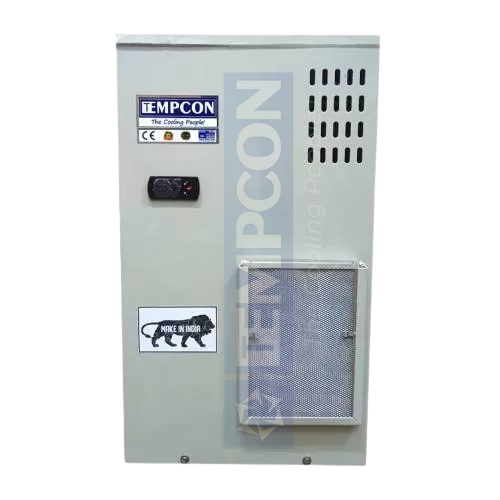
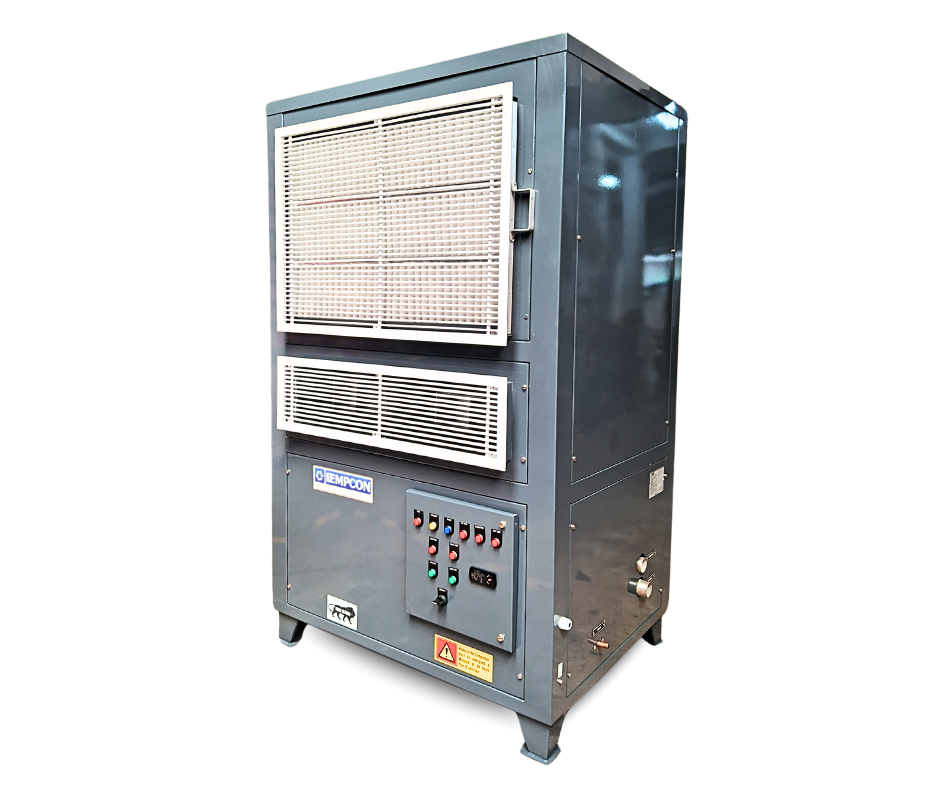
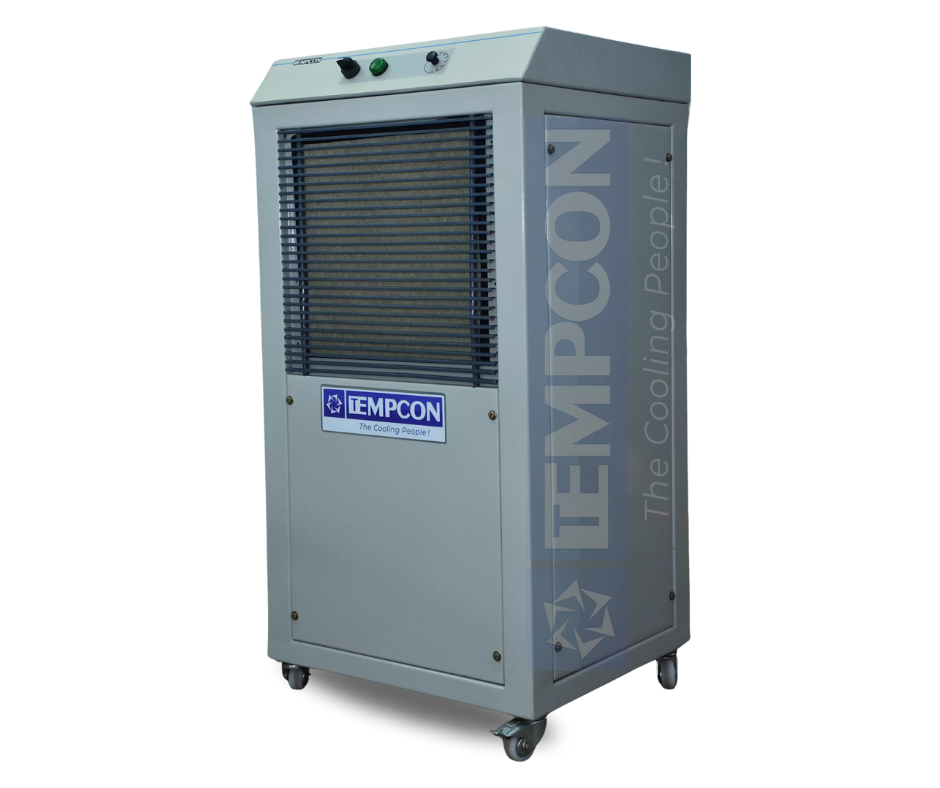
Modern oil chillers from Tempcon use microprocessor-based PID controllers to regulate temperature precisely.
2. No Water Dependency
Industrial oil chillers operate in a closed-loop cooling system. They eliminate the need for cooling towers. Benefits include:
- No water consumption
- No scaling or biological growth
- No water treatment costs
Oil chillers are suitable for water-scarce regions and modern automated plants.
3. Longer Hydraulic Component Life
Stable oil temperature protects critical hydraulic components such as:
- Pumps
- Valves
- Seals
- Cylinders
Oil chillers prevent overheating and reduce:
- Seal hardening
- Pump cavitation
- Component wear
This significantly improves equipment lifespan and system reliability.
4. Lower Maintenance and Simplified System
oil chillers offer that traditional cooling towers cannot:
- Fewer mechanical components
- Minimal piping requirements
- Reduced maintenance needs
Their modular designs are easier to install and maintain.
5. Energy Efficiency and Predictable Operating Costs
Modern oil chillers use high-efficiency compressors and advanced control systems. These modular components regulate cooling output based on system load and offer:
- Better energy utilization
- Consistent cooling performance
- Predictable operational costs
The energy cost is reduced by up to 30%. You can save on energy bills and make a positive environmental impact.
6. Compact and Easy Installation
Industrial oil chillers require less space than cooling tower setups. They can be installed:
- Near hydraulic power packs
- Inside production floors
- In compact industrial environments
This makes them ideal for retrofit installations in existing manufacturing plants. Here’s a quick comparison table to follow.
Oil Chiller vs Heat Exchanger + Cooling Tower: A Quick Comparison
| Parameter | Industrial Oil Chiller | Heat Exchanger + Cooling Tower |
| Temperature Control | Precise and stable | Seasonal and inconsistent |
| Water Requirement | None | High |
| Maintenance | Low | High |
| Risk of Oil Contamination | None | High |
| Energy Efficiency | High | Variable |
| Installation | Compact and simple | Complex |
| Lifecycle Cost | Lower | Higher |
Applications Where Oil Chillers Are Highly Recommended
Industrial oil chillers are widely used across various manufacturing sectors, including:
- Hydraulic power packs
- CNC machines
- Injection moulding machines
- Die casting machines
- Press and forging machines
- Steel and aluminium plants
Modern oil chillers like those offered by Tempcon fit well in these industrial units.
Industrial Oil Chillers Are the Smarter Choice
Industrial oil chillers provide:
- Precise temperature control
- Improved reliability
- Reduced maintenance
- Long-term cost savings.
Hydraulic power packs and high-precision machinery need industrial oil chillers. Upgrade your existing units with Tempcon with a more energy-efficient cooling solution.