
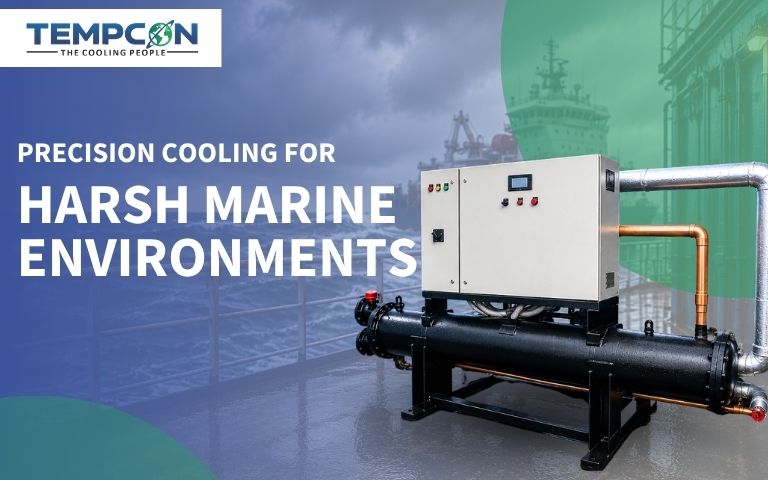
The marine industry operates in some of the world’s harshest environments, where high temperatures, salt-laden air, humidity, vibration, and continuous operation place significant demands on onboard equipment. From commercial cargo ships and offshore platforms to cruise liners, fishing vessels, and naval ships, reliable cooling systems are essential for maintaining operational efficiency and equipment reliability.
Marine chillers provide controlled cooling for HVAC systems, engine rooms, electrical equipment, hydraulic systems, cargo refrigeration, and offshore process applications. By maintaining optimal temperatures, chillers help reduce downtime, improve energy efficiency, and extend equipment life.
The marine industry operates in some of the world’s harshest environments
Marine chillers provide controlled cooling for HVAC systems, engine rooms, electrical equipment, hydraulic systems, cargo refrigeration, and offshore process applications.
Maintaining optimal temperatures, chillers help reduce downtime, improve energy efficiency, and extend equipment life.
Tempcon’s Advanced Industrial Cooling Reinforces India’s Iron and Steel Industry
Why Cooling is Critical in Marine Applications
Marine vessels contain numerous heat-generating systems. These heat-generating systems are crucial for marine operations.
- Main propulsion engines
- Auxiliary generators
- Hydraulic power packs
- Electrical switchboards
- Variable Frequency Drives (VFDs)
- Navigation and communication equipment
- Refrigeration systems
- Accommodation HVAC systems
Without proper industrial cooling:
- Equipment efficiency decreases
- Electronic components may fail
- Hydraulic oil temperatures rise
- Crew comfort is compromised
- Maintenance costs increase
Marine chillers provide continuous cooling to ensure safe and reliable vessel operation
Common Cooling Challenges in the Marine Industry
Marine cooling systems must operate under demanding conditions, such as:
Saltwater Corrosion
Continuous exposure to seawater and salty air can rapidly corrode standard cooling equipment.
High Ambient Temperatures
Ships operating in the Middle East, Africa, and tropical regions often face ambient temperatures exceeding 50°C.
Constant Vibration and Movement
Marine equipment must withstand vessel pitching, rolling, and engine vibrations.
Limited Installation Space
Engine rooms and equipment compartments often have severe space constraints.
24/7 Continuous Operation
Marine systems frequently operate around the clock with minimal downtime.
For these reasons, marine chillers are specially designed with corrosion-resistant materials. Their rugged construction and reliable control systems make them fit for marine environments.
Types of Chillers Used in the Marine Industry
1. Water-Cooled Marine Chillers
Water-cooled chillers are the most widely used cooling systems on large vessels and offshore platforms. These chillers use seawater through a condenser to reject heat from the refrigeration cycle.
Applications
- Cargo ships
- Cruise vessels
- Naval ships
- Offshore oil and gas platforms
- Ferries
Benefits
- High energy efficiency
- Lower operating costs
- Suitable for large cooling loads
- Reliable performance in hot climates
- Compact installation footprint
2. Air-Cooled Marine Chillers
Air-cooled chillers use ambient air and condenser fans for heat rejection.
Applications
- Patrol vessels
- Small marine craft
- Port facilities
- Marine workshops
- Support vessels
Benefits
- Simple installation
- No seawater piping required
- Lower maintenance requirements
- Suitable for smaller cooling capacities
3. Screw Chillers
Screw compressor chillers are widely used in medium-to-large marine cooling applications.
Applications
- Offshore platforms
- Cargo vessels
- Cruise ships
- Naval vessels
Benefits
- High reliability
- Excellent part-load efficiency
- Long operating life
- Stable performance under varying loads
4. Centrifugal Chillers
Centrifugal chillers are used for very large cooling capacities.
Applications
- Mega cruise ships
- Offshore processing facilities
- Large passenger vessels
- Naval installations
Benefits
- Suitable for centralised cooling plants
- Exceptional efficiency at high capacities
- Low operating costs
Energy Efficiency Benefits of Marine Chillers
Modern marine chillers help reduce operating costs through:
- High-efficiency compressors
- Variable Frequency Drives (VFDs)
- Optimised heat exchange systems
- Reduced power consumption
- Improved part-load performance
Energy-efficient cooling contributes to lower fuel consumption and reduced operational expenses
Marine Operations Need Specific Industrial Chillers
TempMarine chillers play a vital role in maintaining the performance, reliability, and safety of vessels and offshore facilities. From HVAC cooling and engine room temperature control to hydraulic oil cooling and offshore process applications, properly designed chillers ensure efficient operation even in demanding marine environments.
Selecting the right marine chiller requires consideration of cooling capacity, environmental conditions, available space, energy efficiency, corrosion resistance, and class certification requirements. With appropriate design and engineering, marine chillers can deliver reliable cooling performance for years of continuous marine service.
Contact Tempcon For Reliable Marine Operation Cooling
Tempcon offers the most reliable marine industrial cooling solutions. We are an ISO-certified industrial chiller manufacturer with 40 years of experience. We know what modern marine operations need and provide the exact industrial chiller solutions.
Our professional assistance and post-sales support will make sure your marine operations go unhindered. Contact us today to make your marine industrial operations future-ready.