
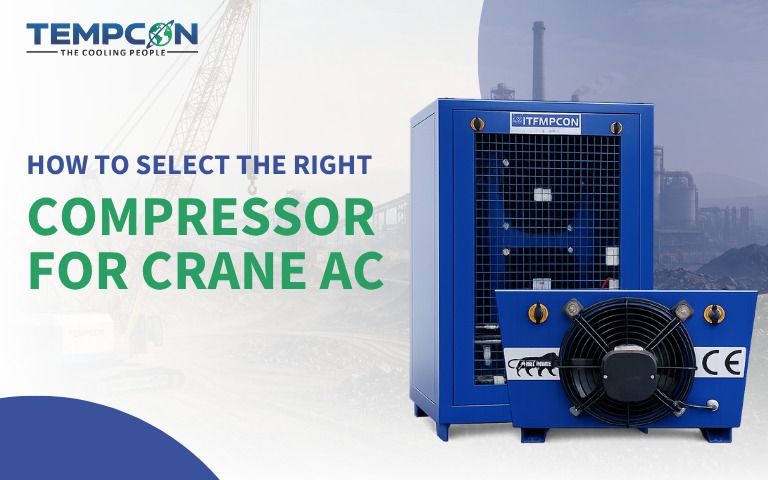
Heavy industries use such crane ACs to tackle extreme heat in crane cabins. Crane operators face temperatures that can rise above 50°C. Ordinary air conditioners cannot deliver reliable cooling performance.
Industrial crane air conditioners are designed to provide continuous cooling in harsh operating conditions. One of the most important components in these systems is the compressor.
The compressor directly affects cooling efficiency and energy consumption. However, not every compressor technology is suitable for industrial crane applications.
We will discover the types of compressors used in Crane AC systems. Before that, let’s find out why compressor selection matters in Crane ACs.
Industrial crane air conditioners are designed to provide continuous cooling in harsh operating conditions.
The compressor directly affects cooling efficiency and energy consumption.
Heavy industries use such crane ACs to tackle extreme heat in crane cabins.
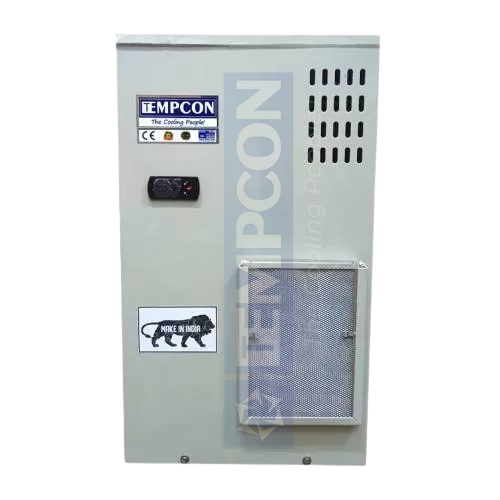
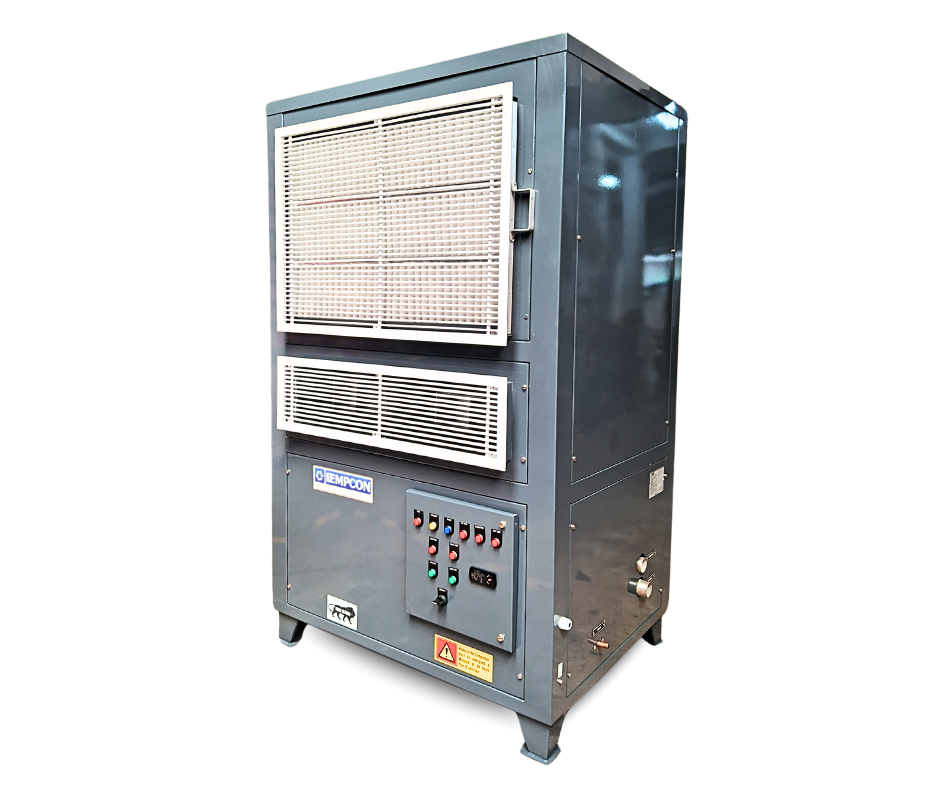
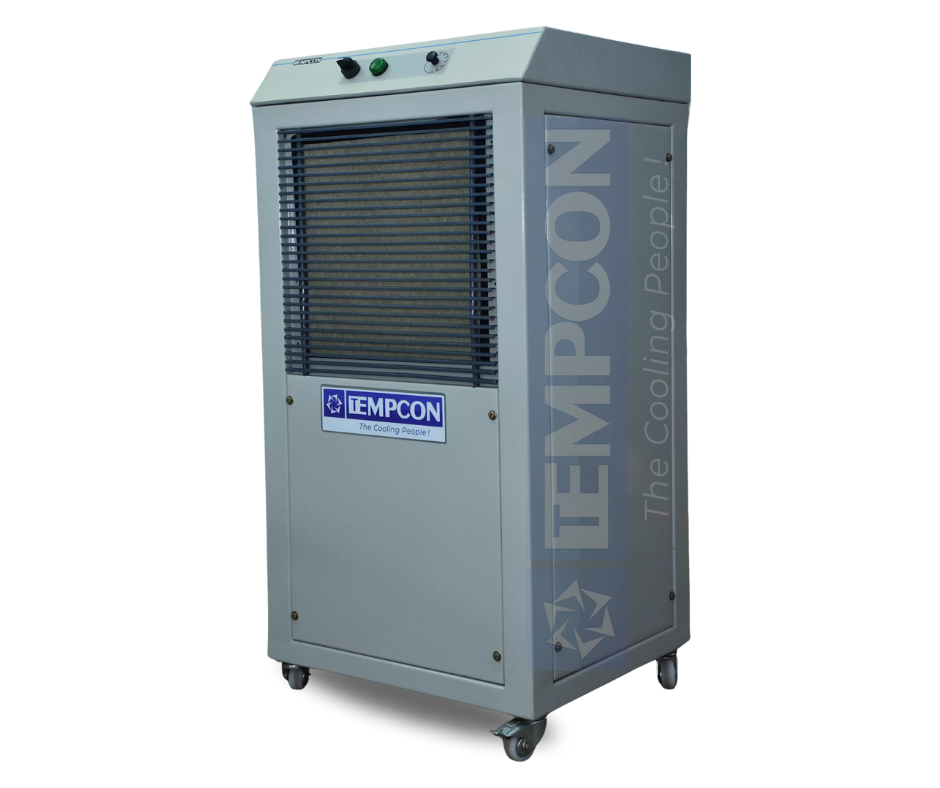
Tempcon’s Advanced Industrial Cooling Reinforces India’s Iron and Steel Industry
Why Compressor Selection Matters in Crane Air Conditioners
Compressor selection depends on why industries need crane ACs. Here is a list of reasons you must know before choosing one.
Crane Cabins Operate in Harsh Industrial Conditions
Crane AC systems face these challenges.
- Ambient temperatures above 50°C
- Heat from furnaces and molten metal
- Heavy dust and metallic particles
- Continuous vibration and crane movement
- Long operating hours
- Voltage fluctuations in industrial power supply
These conditions place continuous stress on the air conditioning system. As a result, compressor quality becomes extremely important.
A Compressor is the Heart of Crane ACs
A compressor circulates refrigerant to maintain the cooling cycle. A properly selected industrial-grade compressor helps deliver the following:
- Stable cooling performance
- Faster heat removal
- Lower power consumption
- Reduced downtime
- Longer equipment life
- Better operator comfort
The system may face overheating and trip frequently if the compressor is undersized or poorly designed.
Industrial Crane ACs Need Heavy-Duty Compressors
Industrial Crane AC applications require compressors that can handle:
- High ambient temperatures
- Continuous operation
- Severe vibration
- Dusty environments
- Heavy thermal loads
- Long refrigerant piping
Only heavy-duty compressor technology can meet these challenges that residential ACs can’t.
Types of Compressors Used in Crane ACs
Every compressor type serves a particular purpose apart from heavy cooling.
Hermetic Reciprocating Compressors
Hermetic reciprocating compressors are used for heavy-duty cooling. These compressors use piston-based compression technology. They are known for their rugged performance.
Advantages of Hermetic Reciprocating Compressors
- Strong cooling performance
- Reliable operation under heavy heat loads
- Better tolerance for harsh industrial conditions
- Suitable for medium and large cooling capacities
- Good performance in high ambient temperatures
Limitations
- Higher vibration compared to scroll compressors
- More moving parts
- Slightly higher maintenance requirements
Best Applications
These compressors are commonly used in:
- Steel plants
- Foundries
- Hot rolling mills
- Continuous casting cranes
- Heavy manufacturing industries
Industries prefer reciprocating compressors for reliable performance under fluctuating operating conditions.
Scroll Compressors
Scroll compressors are commonly used in modern Crane ACs for energy efficiency. These compressors use two spiral-shaped scroll elements to compress refrigerants. They are popular because of their compact design and lower vibration.
Advantages of Scroll Compressors
- Lower vibration and noise
- Smooth refrigerant compression
- Energy-efficient operation
- Compact installation design
- Stable cooling performance
Limitations
- Sensitive to refrigerant contamination
- Requires proper system protection
- Less service-friendly in contaminated environments
Best Applications
Scroll compressors are suitable for:
- Port cranes
- Modern crane cabins
- Medium-duty industrial applications
- Cleaner industrial environments
Industries use scroll compressors for compact installation and energy efficiency. However, compressor selection should always depend on the actual operating environment.
Semi-Hermetic Compressors
Semi-hermetic compressors are used where reliability and serviceability are critical. These compressors allow technicians to repair internal components without replacing the complete unit.
Advantages of Semi-Hermetic Compressors
- Heavy-duty industrial construction
- Long operating life
- Better serviceability
- Suitable for continuous-duty operation
- Reliable performance in harsh environments
Limitations
- Requires larger installation space
- Higher initial investment
- More complex system design
Best Applications
These compressors are commonly used in:
- Steel plants
- Mining industries
- High-temperature process areas
- Heavy-duty crane applications
- Extreme ambient environments
Semi-hermetic compressors are preferred mostly by process industries to reduce equipment downtime.
How to Select the Right Compressor for Crane AC
There is no single compressor suitable for every industrial application. The correct compressor depends on several operating conditions.
Important selection factors include:
- Ambient temperature
- Crane cabin size
- Cooling load
- Duty cycle
- Dust exposure
- Vibration levels
- Maintenance availability
- Power supply conditions
For example, a crane operating above a steel furnace requires a completely different cooling solution compared to a container handling crane at a port. Proper heat load calculation and industrial application analysis are mandatory.
Crucial Features to Look for in a Crane AC Compressor
Consider these features to choose a crane AC compressor.
Ambient Temperature Performance
Industrial Crane AC systems often operate above 50°C ambient temperatures. Compressors must maintain stable cooling even under high condensing temperatures.
Vibration Resistance
Continuous crane travel and trolley movement vibrate crane components continuously. Industrial Crane AC must have anti-vibration protection for reliable operation.
Energy Consumption
Industrial cranes run continuously for long hours. Energy-efficient compressors reduce operating costs and power consumption.
Low Maintenance
Frequent maintenance shutdowns affect plant productivity. Industries prefer reliable compressors for long-term performance with minimal downtime.
Dust and Corrosion Protection
Proper filtration and modern components can resist dust and corrosion.
Common Compressor Problems in Crane AC Systems
Some common problems faced in industrial Crane AC systems include:
- Compressor overheating
- Refrigerant leakage
- Continuous vibration
- Dust Contamination
- Improper Compressor Sizing
This is why proper engineering selection helps avoid these problems.
How Tempcon Designs Crane AC Systems for Harsh Industries
Tempcon designs heavy-duty industrial Crane Air Conditioners for steel plants, mining industries, aluminium facilities, ports, and heavy engineering applications.
The company focuses on:
- High ambient tropicalized designs
- Continuous industrial cooling
- Industrial-grade components
- Reliable operator comfort
- Energy-efficienct
- Industrial customization
- Low maintenance
Tempcon Crane AC systems are designed specifically for industrial conditions. We use CE and UL-certified components for proper cooling and reliability.
Choose the Right Compressor for Crane AC with Tempcon
The right choice depends on
- ambient temperature
- vibration levels
- cooling load
- Industrial operating conditions.
We manufacture crane ACs specifically for heavy industries like metal, mining, ports, and heavy manufacturing, etc. We assist you in understanding these factors and suggest proper compressors for crane ACs.
Get in touch with us for professional industrial cooling consultation.
Frequently Asked Questions
The right choice depends on