
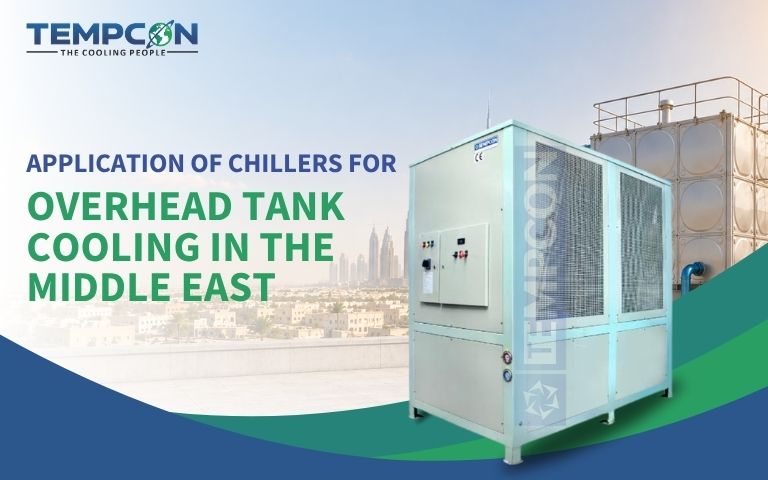
Overhead water tanks are widely used across industries, commercial facilities and infrastructure projects in the Middle East. However, extreme ambient temperatures and intense solar exposure can significantly raise the temperature of stored water.
An Overhead Tank Water Chiller provides active cooling, helping maintain the required water temperature for temperature-sensitive industrial and commercial applications.
Why Do Overhead Water Tanks Need Cooling in the Middle East?
Operations in Middle East industries face multiple challenges due to climate conditions and improper water cooling measures
Hot Water Can Affect Operations
How Does an Overhead Tank Water Chiller Work?
An overhead tank cooling system generally follows these cooling steps.
Water Circulation
A pump draws warm water from the overhead tank and circulates it through the chiller system.
Heat Removal
The chiller’s evaporator absorbs heat from the circulating water and transfers it to the refrigeration system.
Cooling Process
The refrigeration cycle removes the absorbed heat, lowering the water temperature to the required level.
Return to Tank
The cooled water is circulated back into the overhead tank or supplied directly to the connected application.
Temperature Monitoring
Sensors continuously monitor water temperature, allowing the control system to regulate chiller operation.
Chiller capacity, flow rate and target temperature are selected according to tank size, heat load and Middle Eastern ambient conditions.
Major Applications of Overhead Tank Water Chillers in the Middle East
Here are the major industrial applications that must incorporate overhead water tank cooling.
Industrial Manufacturing
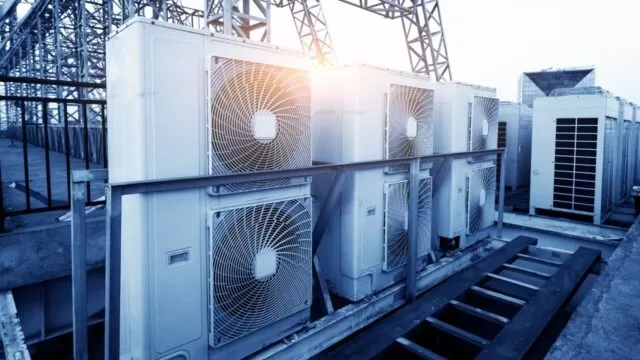
Overhead tank chillers can provide temperature-controlled water for plastic moulding, extrusion, metal processing and electroplating.

Oil & Gas and Petrochemical
Oil and gas facilities may require controlled-temperature water for selected process and auxiliary applications.

Food and Beverage
Food processing facilities can use chilled water for suitable processing and utility applications where excessive water temperature can affect operational consistency.

Pharmaceutical and Healthcare
Temperature-controlled water can support specific cooling and utility requirements in pharmaceutical and healthcare facilities for application-specific hygiene and temperature requirements.
Hotels and Commercial Buildings
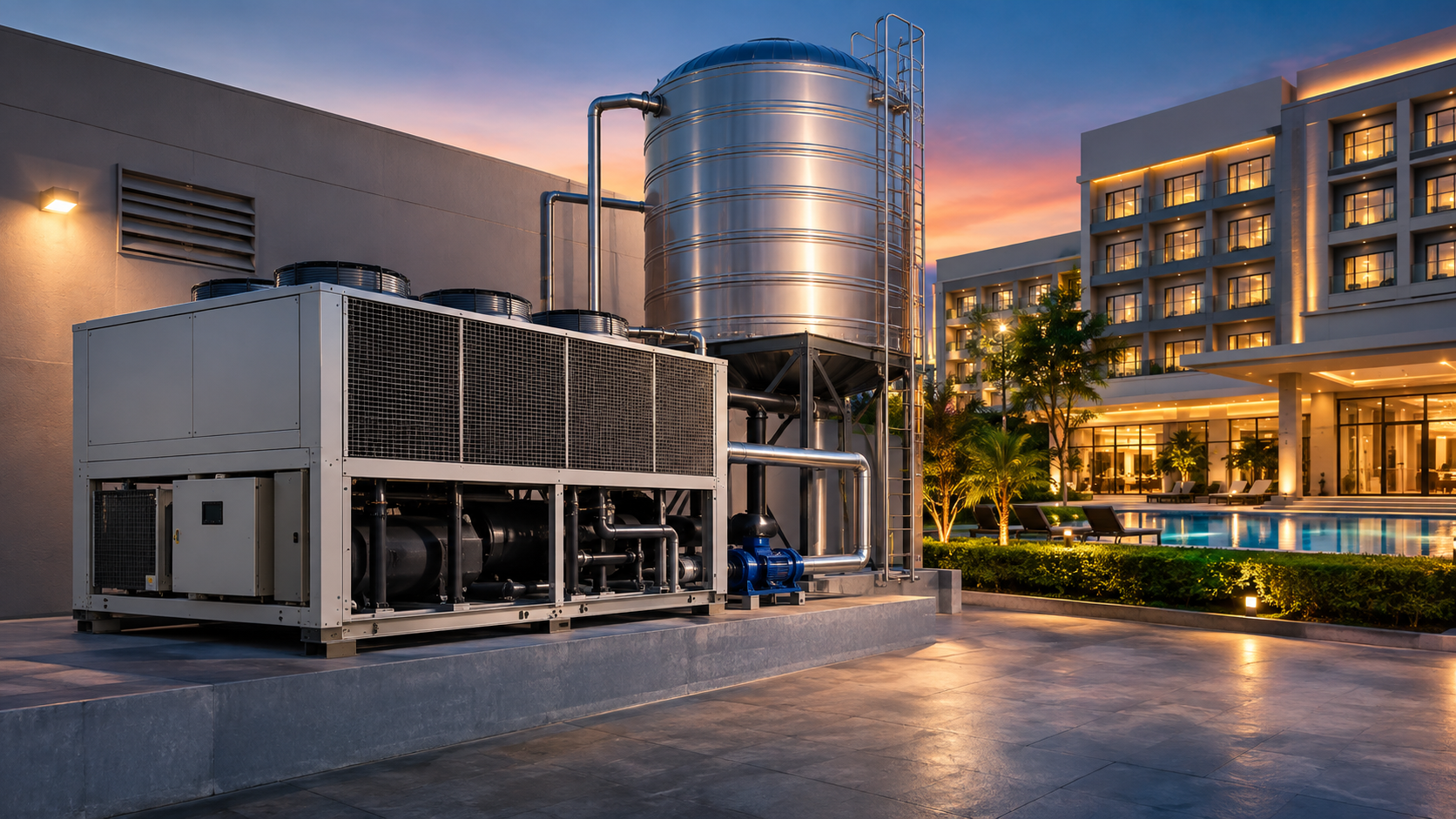
Large hotels, resorts and commercial facilities can use chillers where overhead water storage forms part of a temperature-sensitive cooling or utility system.

Concrete and Construction
Chilled water can help concrete plants manage water temperature during production, particularly in the high-ambient conditions common across the Middle East.
Key Factors When Selecting a Chiller for an Overhead Water Tank
Selecting an Overhead Tank Water Chiller requires evaluating several operating parameters.
Tank Capacity
Determine the volume of water requiring cooling.
Cooling Load
Consider ambient heat gain, initial water temperature and required cooling capacity.
Target Temperature
Define the required water temperature for the intended application.
Flow Rate
Ensure adequate circulation between the tank and chiller.
Ambient Conditions
Account for the high temperatures, dust and humidity common in Middle Eastern environments.
Chiller Type
Choose between air-cooled and water-cooled systems based on site infrastructure and heat-rejection requirements.
Energy Efficiency
Consider compressor efficiency, controls and operating hours to optimise energy consumption.
Tempcon specifically positions both air-cooled and water-cooled chillers for Middle Eastern industrial conditions.
Benefits of Using a Chiller for Overhead Water Tank Cooling
A properly engineered overhead tank cooling system can provide several operational advantages.
Consistent Water Temperature
Helps maintain the required process conditions.
Improved Process Stability
Reduces temperature variations in water-dependent applications.
Equipment Protection
Helps prevent excessive water temperature from affecting connected equipment.
Reliable High-Ambient Operation
A suitably specified chiller can be designed around demanding Middle Eastern conditions.
Energy-Efficient Cooling
Modern refrigeration systems can provide controlled cooling without relying on continuous conventional cooling methods.
Application-Specific Design
Chiller capacity, controls, pumps and heat exchangers can be selected according to the actual requirement.
Tempcon’s UAE-focused industrial water tank chiller solution is designed for high-ambient operation and consistent water-temperature control. Our customised configurations focus on individual operating requirements.
Why Choose a Purpose-Built Chiller for Middle Eastern Conditions?
An overhead tank water chiller design must consider ambient temperature, heat load, desired water temperature, circulation rate and site conditions.
Tempcon designs industrial water chillers for the Middle Eastern industries with features such as:
- corrosion-resistant construction
- industrial-grade components
- intelligent temperature controls
- configurations suited to demanding environments.
Its UAE-focused solutions are also positioned for applications across industries including oil and gas and manufacturing.
Choose the Right Overhead Tank Water Chiller for Your Application
Tempcon assesses factors such as tank capacity, heat load, required temperature, flow rate and ambient conditions to develop a customised overhead tank water chiller for your industrial application.
Get on a call with us to discuss and design the best overhead tank water cooling solutions.
Frequently Asked Questions
It is a chiller system designed to remove heat from water stored in or circulated through an overhead tank, helping maintain the required water temperature for a specific application.
High ambient temperatures and solar exposure can significantly heat stored water. Active cooling helps maintain a controlled temperature where water temperature is important for industrial or commercial operations.
Yes. A properly engineered circulation loop can connect the storage tank to an industrial chiller. The configuration depends on tank size, flow rate, cooling load and required temperature.
Selection should consider tank capacity, initial and target water temperatures, ambient heat gain, water consumption, circulation flow rate and operating hours.
Neither is universally better. The choice depends on site conditions, water availability, heat-rejection requirements, ambient temperature and existing infrastructure. A chiller specialist can determine the appropriate configuration.